
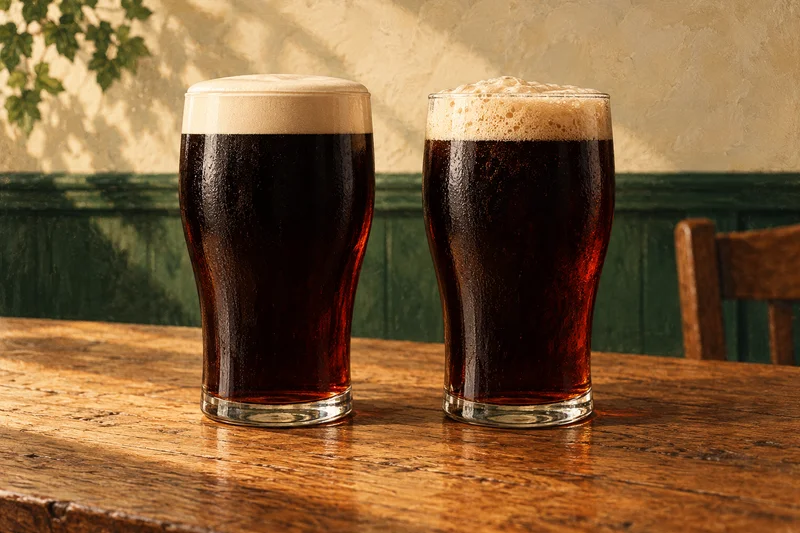
Standing in front of the beer shelf, it is easy to mistake two Guinness packs for the same drink in different containers. One promises the familiar pub pint. Another says Extra Stout. Both carry the same brand, but the choice changes what ends up in your glass.
My first-buy recommendation is Draught if you want the smooth pour you associate with a Guinness tap. Choose Extra Stout if you like a sharper finish. The useful question is which texture you want, then which pack gives you fair value.
Guinness Draught and Extra Stout: the quick comparison
Guinness Draught is a stout. The word “stout” names a beer style, while Guinness Draught Stout names a particular product. For this comparison, “Guinness stout” means Extra Stout, the other main bottle shoppers often have in mind.
| What matters | Draught / Extra Stout |
|---|---|
| Mouthfeel | Smooth and soft / brisker carbonation |
| Foam | Dense, creamy head / frothier head |
| Flavor direction | Balanced roast / sharper, dry finish |
| US product-page ABV | 4.2% / 5.6% |
| Calories per 12 fl oz | 125 / 180 |
| My buying cue | Familiar pub-style pour / more bite |
Those strength and calorie figures refer to the US products, at equal serving sizes. Check the label on your own bottle or can, especially when shopping outside the US. Similar names do not guarantee the same strength in every market.
Buy Guinness Draught for the smooth pub pour
The appeal of Guinness Draught is the way its roasted character arrives with a soft texture. Guinness describes coffee and chocolate aromas with a balance of sweet and bitter notes. Its US listing gives 4.2% ABV and 125 calories per 12 fl oz.
If you have heard someone call it a session beer, that generally points to its modest strength. It is still an alcoholic drink. A large glass also holds more beer than the 12-ounce serving used for the nutrition figures.
I would start here if you are buying Guinness for the first time and want the version most closely tied to the familiar tap experience. It is also my choice when someone says they want roast without a lot of fizz.
Soft does not mean sweet like a dessert. Nor does a dark appearance prove that a beer will feel heavy. If your idea of a delicious stout is a thick, syrupy brew, reset that expectation before buying a pack. Draught may feel light to you. That can be a good thing with dinner, or leave you wanting more weight.
Buy Guinness Extra Stout for a sharper finish
Guinness Extra Stout is the choice I would make for someone who wants more bite. The maker describes a crisp taste, roasted coffee and dark chocolate aromas, and a dry finish. Its US product page lists 5.6% ABV and 180 calories per 12 fl oz.
Compared with the softer pour, the more lively carbonation changes the feel of each sip. If Draught has seemed a bit too gentle for your taste, this is the next bottle I would try. If you dislike a gassy drink, however, the extra fizz may count against it.
Do not read “Extra” as a promise that it is better. Higher strength cannot tell you whether you will like the flavor. Personally, I would spend on the version that fits my palate before paying for a name that sounds more serious.
The current US page also identifies this beer as brewed and bottled in Latrobe, Pennsylvania. Do not assume every Guinness on a US shelf is imported from Ireland. Check the bottle when origin matters to you, rather than relying on an older pack design or a memory of the brand.
Why nitrogen makes the difference
Guinness Draught is dispensed with nitrogen and carbon dioxide. Extra Stout has more carbonation, as the Guinness Webstore FAQ explains. That helps account for the contrast between the tight foam of one and the sharper fizz of the other.
This is why “can versus bottle” is an incomplete answer. A container tells you how the beer is packaged. The full product name tells you which brew you are buying. Bottled Guinness is not automatically Extra Stout, and cans are not a separate beer style.
Look for the words Guinness Draught or Guinness Extra Stout before comparing prices. The harp alone does not settle it. If a store lists only “Guinness beer,” inspect the pack photo and description before adding it to your cart.
Cans, bottles, or tap: what should you buy?
For the familiar pour in your own home, I would choose Guinness Draught cans. The Guinness FAQ explains that the widget releases trapped beer and nitrogen when the can opens. That creates the surge and head associated with the pub version.
Use a clean glass with enough room for the contents and foam. Chill cans first, then follow the pour directions on the pack. Give the head time to settle before judging it. You do not need to buy special equipment for ordinary Draught cans.
At a bar, ask which version is on tap. For a bottle, read the name before ordering. That small check is worth more than assuming all Guinness tastes the same once poured.
When comparing packs, take three things into account:
- Total volume. Multiply the number of cans or bottles by the ounces in each. Equal pack counts can hold different amounts.
- Price per ounce. Divide the shelf price by that total. This makes different sizes easier to compare.
- What you want to drink. A cheaper pack is poor value if you bought the wrong version.
For example, four 14.9-ounce cans contain 59.6 ounces. Six 11.2-ounce bottles contain 67.2 ounces. These are size examples, not a claim about every pack on sale. Use your store's actual labels and prices. Save the larger purchase until you know which taste you prefer.
Where Guinness Foreign Extra Stout fits
Guinness Foreign Extra Stout is a third option. Its US listing gives 7.5% ABV and describes a fuller body with coffee notes, subtle sweetness, dried fruit, and caramel aromas.
The recipe has roots in export brewing, with extra hops used for long sea journeys. For a buyer today, the important point is that Guinness Foreign Extra Stout is a distinct, stronger product. It is not simply the ordinary Extra Stout bottle sold abroad.
I would consider it when you want a more intense glass to sip. I would not choose it as a direct substitute when someone has asked for the light, smooth tap version. Check for the word “Foreign” before you pay.
Which Guinness belongs with dinner or in a recipe?
For dinner, match the beer to your taste before following a rigid pairing rule. My starting point would be the softer pour beside a sandwich or roast chicken. I would try the sharper bottle with a rich stew if I wanted more contrast. Neither choice needs to win a contest.
For cooking, buy the version named in the recipe when one is specified. A recipe developed with one beer may taste different with another. If it just calls for stout, consider whether you want a gentler result or more bite before making a swap.
I would not pay extra for a pour ritual when the beer is going straight into a pan. Buy the right quantity for the dish and save any price comparison for equal volumes. For your glass, though, texture is part of what you are paying to enjoy.
My pick: start with the experience you want
Choose Guinness Draught Stout if your goal is the familiar smooth pub pour at home. Choose Extra Stout if you want a drier-feeling finish and more fizz. Keep Foreign Extra separate unless you specifically want its greater strength and fuller style.
Still unsure? Start with the smallest practical purchase, or try a glass at a bar before stocking the fridge. Compare the taste at a similar serving temperature and notice the finish as well as the foam. The best buy is the one you want again, at a price that makes sense for the amount in the pack.
Nora Keane
Nora's corner of Brocach is about useful choices: what belongs on the shelf, what works in the glass, and where spending more makes sense.